

Jakarta - A total of 20 members of the Kartunet Community participated in entrepreneurship training organized by the Ministry of Cooperatives and SMEs (Kemenkop UKM) at the Grand Menteng Hotel, Jakarta, from November 7-9, 2014. The training, which is a community empowerment program, was attended by a total of 35 participants with disabilities, including the visually impaired, physically disabled, and hearing impaired.
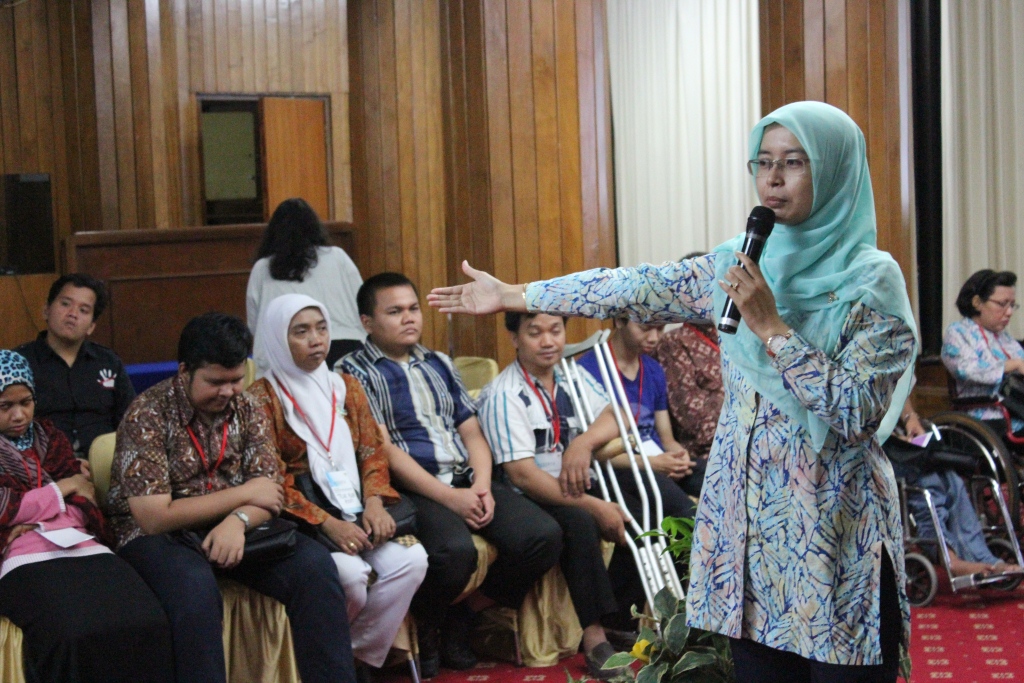
This training aims to foster entrepreneurship among people with disabilities and enhance their productivity so they can compete effectively. In his address, Assistant Deputy for Human Resources, Afrizal Kusai, acknowledged that empowerment efforts for people with disabilities have not been optimally addressed thus far.
“With this training, they can utilize their time productively without depending on others,” stated Afrizal in his speech, which also marked the opening of the three-day entrepreneurship training for people with disabilities. During the training, participants were guided step-by-step to develop a business. This included self-potential recognition, motivation to overcome mental barriers, principles of becoming an entrepreneur, developing a business plan, financial management, and maintaining product quality.
Before attending the training, participants were asked to prepare a simple business plan. This ensured they already had an idea of the business they were developing, and then received input and advice from the trainers. Out of the total 35 participants, 20 were from the Kartunet Community. Kartunet is committed to being a productive and innovative community for people with disabilities by developing their potential through information and communication technology (ICT).
One of the groups within the Kartunet Community that will be developed is the ICT-based entrepreneurs group.
“This training is a stepping stone to produce entrepreneurs with disabilities who can compete using ICT,” said M. Ikhwan Tariqo, Chairman of the Kartunet Community 2013-2015. The government hopes this entrepreneurship training will enable people with disabilities to no longer rely on job vacancies in companies or as Civil Servants, but instead create employment opportunities according to their respective skills.
By the end of the training, participants are also expected to be able to create business plans that can be submitted to the Ministry of Cooperatives and SMEs for evaluation and to receive government funding. In addition to product improvement training, the ministry will also provide capital injections for the participants. They will receive stimulant funds ranging from Rp 5,000,000 to Rp 15,000,000 per business.
The amount of these funds will be adjusted based on the business development potential and the capital required. Meanwhile, one of the participants, Toto Sugihatno, stated that this training is very beneficial for improving entrepreneurship management. He hopes for follow-up to the training, including mentorship from the Ministry of Cooperatives and SMEs.
“These stimulant funds can be utilized for the development of businesses within our group,” said Toto, who is a visually impaired participant. According to him, with a capital injection of Rp5-10 million per person, they can develop the handicraft business they have been running. Through this training, he also hopes participants can share experiences with each other.
Post-training, participants will join the ICT-based Kartunet entrepreneurship group. This will allow them to stay connected, share, and develop their businesses with access to available information resources. The capital assistance funds from the Ministry of Cooperatives and SMEs are promised to be disbursed before the end of 2014.(DPM)