
Kartunet - Good news for the entire disability community in Indonesia. On July 2, 2026, President Prabowo Subianto officially signed Government Regulation (PP) Number 31 of 2026 concerning Concessions for Persons with Disabilities and Incentives for Companies. This regulation is a direct mandate from Law Number 8 of 2016 concerning Persons with Disabilities.
Legally, "Concession" is defined as any form of cost reduction or tariff relief provided by the Government, Regional Governments, State-Owned Enterprises (BUMN), Regionally-Owned Enterprises (BUMD), and even private parties. This new regulation stipulates that the amount of cost reduction (discount) that must be given to persons with disabilities is at least 20% (twenty percent). This tariff relief is an absolute right for every person with a disability who possesses a Disability Card (KPD).
So, what services and facilities are entitled to this minimum 20% discount? Below are the complete details across 9 strategic public service sectors according to the provisions of PP No. 31 of 2026:
1. Education Sector
This education cost relief covers formal and non-formal education at various service levels. According to the regulation, education cost concessions include:
Education costs for early childhood education (PAUD), basic education, secondary education, as well as course and training education in educational units organized by the community.
PAUD education costs and secondary education levels in educational units organized by the Government and Regional Governments.
Education costs at higher education institutions.
The "education costs" component, which is discounted by at least 20%, includes educational unit costs, education provision and/or management costs, and students' personal costs. This sector is under the responsibility of the Ministry of Primary and Secondary Education (Kemendikdasmen), the Ministry of Religious Affairs (Kemenag), and the Ministry of Higher Education, Science, and Technology (Kemendikti Saintech).
2. Transportation Sector
Transportation concession rights apply to domestic travel, divided into four main sub-sectors:
Land Transportation: Relief on domestic travel tariffs, parking fees, toll road tariffs, non-subsidized fuel (BBM) costs, and driver's license (SIM) issuance fees.
Sea Transportation: Discounts on domestic travel tariffs and relief on vehicle entry passes at ports.
Air Transportation: Discounts on domestic flight tariffs and passenger vehicle parking fees at airports.
Rail Transportation: Ticket price reductions for urban, intercity (long-distance), and airport train travel.
The formulation of derivative regulations for this sector is coordinated by the Ministry of Transportation, the Ministry of Public Works and Housing (PUPR), the Ministry of Energy and Mineral Resources (ESDM), the Indonesian National Police (Polri), and Regional Governments.
3. Health Sector
These health concessions are designed to alleviate medical service expenses that are outside the coverage of national health insurance programs (JKN/BPJS). The scope includes:
Prices for health service tariffs not covered by the JKN program, other social security programs, and ministry/agency funding schemes. These tariffs consider unit costs, service fees, and healthcare facility development costs.
Health insurance premiums organized by private insurance companies.
Technical regulations in this health sector are the responsibility of the Ministry of Health together with local Regional Governments.
4. Assistive Devices (Assistive Technology) Sector
The state provides concessions with a minimum 20% discount for the procurement of independence-enabling assistive devices for persons with disabilities, divided into two categories:
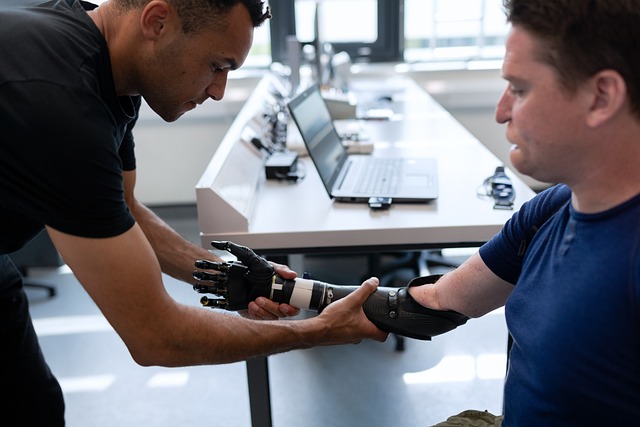
Physical Objects: Includes mobility aids (such as electric or adaptive wheelchairs, crutches, prostheses, orthoses, walkers, standing frames); hearing aids (such as hearing aids, cochlear implants, vibratory needles); and physical vision aids (such as white canes, braille displays, braille watches, magnifiers, low-vision aids).
Software: Consists of a collection of computer programs supporting disability independence. Examples include screen reader applications, photo reader or image description software, adaptive educational software, transcriber applications, speech recognition software, speech output software, and voice amplification systems.
The Ministry of Social Affairs is designated as the primary responsible party for creating derivative regulations for these assistive devices.
5. Housing and Utilities Sector
Daily utility and housing discounts significantly aid economic independence. The scope of this minimum 20% utility cost reduction includes:
Drinking water and sanitation service tariffs.
Electricity bills.
Internet and landline phone tariffs.
Subscription gas costs and gas cylinder purchases.
Rental costs for residences and home ownership costs (including provision fees, notary fees, appraisal fees, and other mortgage costs).
The Ministry of Energy and Mineral Resources (ESDM) is responsible for electricity and gas; the Ministry of Communication and Informatics (Kemenkominfo) for internet and telephone; while the Ministry of Public Works and Housing (PUPR) and Regional Governments handle clean water, sanitation, and housing rental/ownership tariffs.
6. Employment Sector
To achieve equality and enhance the work ethic of persons with disabilities in both private and government workplaces, concessions in this sector include:
Job training costs: All systematic program activities to provide, improve, and develop the competencies and work productivity of persons with disabilities.
Work competency certification costs: Relief on the costs of official competency certification processes carried out objectively through competency tests in accordance with the Indonesian National Work Competency Standards (SKKNI), International Standards, or Special Standards.
The responsible parties for regulations in this sector are the Ministry of Manpower together with the National Professional Certification Agency (BNSP).
7. Entrepreneurship Sector
This sector aims to facilitate ease of business for disability micro, small, and medium enterprise (MSME) actors. The concessions provided include:
Single licensing fees for micro and small businesses (UMK) categorized as low-risk.
Rental costs for micro and small business premises.
The implementing regulations for this sector are formulated by the Ministry of Cooperatives and SMEs together with local Regional Governments.
8. Culture and Tourism Sector
Persons with disabilities have the right to enjoy entertainment facilities equally. The forms of concessions include:
Admission fees for tourism destinations.
Admission fees for art galleries, museums, or cultural heritage sites.
The Ministry of Tourism, the Ministry of Marine Affairs and Fisheries (KKP), the Ministry of Environment, the Ministry of Forestry, the Ministry of Culture, along with Regional Governments, are designated as the formulators of regulations for this disability-friendly tourism sector.
9. Sports Sector
The last sector regulated in this PP guarantees sports cost relief, which includes:
Tariffs for the use of government or regional sports facilities and infrastructure.
Admission fees for sports events or non-sports events.
This sector is under the control of the Ministry of Youth and Sports (Kemenpora) and Regional Governments.
Additional Rights: Larger Discounts for Accompanied Users
The most interesting aspect of PP 31/2026 is the guarantee of additional rights for persons with disabilities who require an accompanying person. In accordance with Article 5 paragraphs (2) and (3), the concession discount amount can be granted greater than 20% for persons with disabilities who need an accompanying person when engaging in activities in three main sectors:
Transportation Sector.
Culture and Tourism Sector.
Sports Sector.
The accompanying person referred to here is legally defined as an individual who possesses knowledge of the type, level, and barriers of disability, and is capable of accompanying and assisting persons with disabilities in their activities.
Transition Period: What If You Don't Have a KPD Yet?
The Government stipulates that all implementing regulations or ministerial regulations for this PP must be completed no later than 2 (two) years from its enactment (meaning completed by July 2028 at the latest).
For persons with disabilities who are currently not registered in the National Disability Data (DNPD) or do not yet have a Virtual KPD, the minimum 20% discount right can still be enjoyed. Article 30 of PP 31/2026 provides a transitional period solution, where concession claims can still be validly made using:
An official Disability Certificate issued based on examination results by health service facilities (Community Health Centers or Hospitals); or
Other valid supporting documents that have commonly been used to obtain concessions before this government regulation came into effect.
Official Document References:
Government Regulation (PP) of the Republic of Indonesia Number 31 of 2026 concerning Concessions for Persons with Disabilities and Incentives for Companies (State Gazette of the Republic of Indonesia Year 2026 Number 73, Supplement to the State Gazette of the Republic of Indonesia Number 7188).
Law (UU) of the Republic of Indonesia Number 8 of 2016 concerning Persons with Disabilities (State Gazette of the Republic of Indonesia Year 2016 Number 69, Supplement to the State Gazette of the Republic of Indonesia Number 5871).
Official Socialization by the Ministry of Social Affairs of the Republic of Indonesia: Video Recording of the Activity "Socialization of Government Regulation No. 31 of 2026 concerning Concessions and KPD" through the Directorate of Social Rehabilitation for Persons with Disabilities (RSPD) and Pusdatin Kemensos RI.
EASTER EGG FOUND!
Type the code BERDAYA-DISABILITAS-1775
Hurry! Only 19 quota left.