
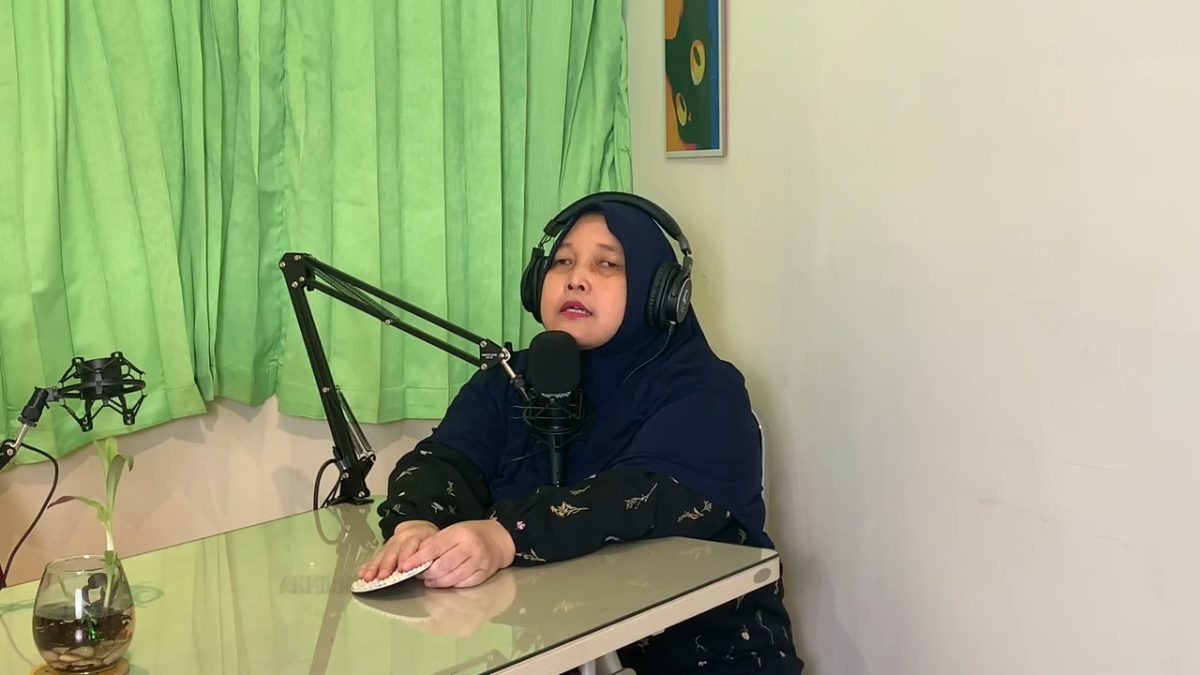
Kartunet - The digitalization of public services was created with one main goal: to cut bureaucracy and make things easier for the public. However, this technological innovation ironically often builds new "dividing walls" for marginalized groups. People with disabilities fundamentally desire access to digital information and services that are equal, at the same time, and with the same ease as the general public. Unfortunately, the reality on the ground shows that many government applications are not yet friendly to screen reader software (screen reader) used by the visually impaired.
A bleak picture of this is clearly illustrated by the experience of Cinttia, a visually impaired person who had to "battle" against the Sirukim application when applying for housing rights at Rusunawa Jagakarsa, South Jakarta.
The 15-Minute Quota Trap and Real-Time Photo Requirement
In the Rusunawa registration process via the Sirukim application, applicants are required to compete for quotas online. Cinttia recounted that when registration opened at a specific time, the quota for 100 people was immediately filled, and the application automatically closed within just 15 minutes. For sighted users, quickly filling in data on a touchscreen might not be a big issue. However, the speed of navigating using audio from a screen reader certainly cannot be equated with visual speed.
The complexity of the Sirukim application became a nightmare for the visually impaired due to the requirement for direct (real-time) document capture. Applicants are not allowed to upload (upload) ID card or Family Card photos already saved in their phone gallery; instead, they must photograph them directly from the application's camera at that very moment. Framing documents to fit within the camera's view is one of the biggest obstacles for the visually impaired without the assistance of a sighted person. The demands for speed and the inaccessibility of this camera feature mean that visually impaired applicants consistently lose out to general applicants.
Violation of the Mandate of Government Regulation No. 42 of 2020
The condition of public service applications that disregard people with disabilities is actually contrary to applicable law. Government Regulation (PP) No. 42 of 2020, Article 16, explicitly mandates Public Service Providers to provide easily accessible services for people with disabilities. The scope of these services explicitly includes public administrative services.
Furthermore, policymakers have anticipated the digital era through Article 17, paragraph (4) of the same Government Regulation, which mandates that Public Service Providers already using technology must provide technology that is easily accessible to Persons with Disabilities. The Sirukim application's failure to accommodate screen readers is proof that digital accessibility audits have not yet become a mandatory standard in the procurement of software (software) in government agencies.
Reasonable Accommodation: A Manual Assistance Solution
When digital systems fail to achieve equality, human intervention becomes the only savior. Thanks to persistent advocacy, including an audience facilitated by DPD Pertuni Jakarta, the public housing management (UPRS) finally provided Reasonable Accommodation for the five disabled applicants who had passed document verification.
Before the general registration phase opened on the Sirukim application, the management specifically invited disabled applicants to the UPRS office. There, UPRS officers provided assistance by opening accounts and manually helping with data entry and document photography for visually impaired applicants. This step of guidance and assistance is a form of fulfilling Article 18 of Government Regulation No. 42 of 2020, where providers are obligated to offer optimal service, treatment, and assistance without additional charges.
Conclusion
The manual help and assistance from UPRS officers at Rusunawa Jagakarsa should be appreciated as a form of empathy and short-term fulfillment of Reasonable Accommodation. However, in the long term, the government cannot continuously rely on manual labor to cover system flaws. The government must start mandating compliance with web and application accessibility guidelines (such as WCAG standards) in every public service technology procurement tender, so that the visually impaired can register and participate independently. (DPM)
References:
- "Honest Review of Rusunawa Jagakarsa from a Disability Perspective: Is It Accessible? How Much Does It Cost? | Pertuni Media" (YouTube).
- Government Regulation of the Republic of Indonesia Number 42 of 2020 concerning Accessibility to Settlements, Public Services, and Protection from Disasters for Persons with Disabilities.
- Lazar, Jonathan. Ensuring Digital Accessibility.
- Mancilla, Rae. Guide to Digital Accessibility.