
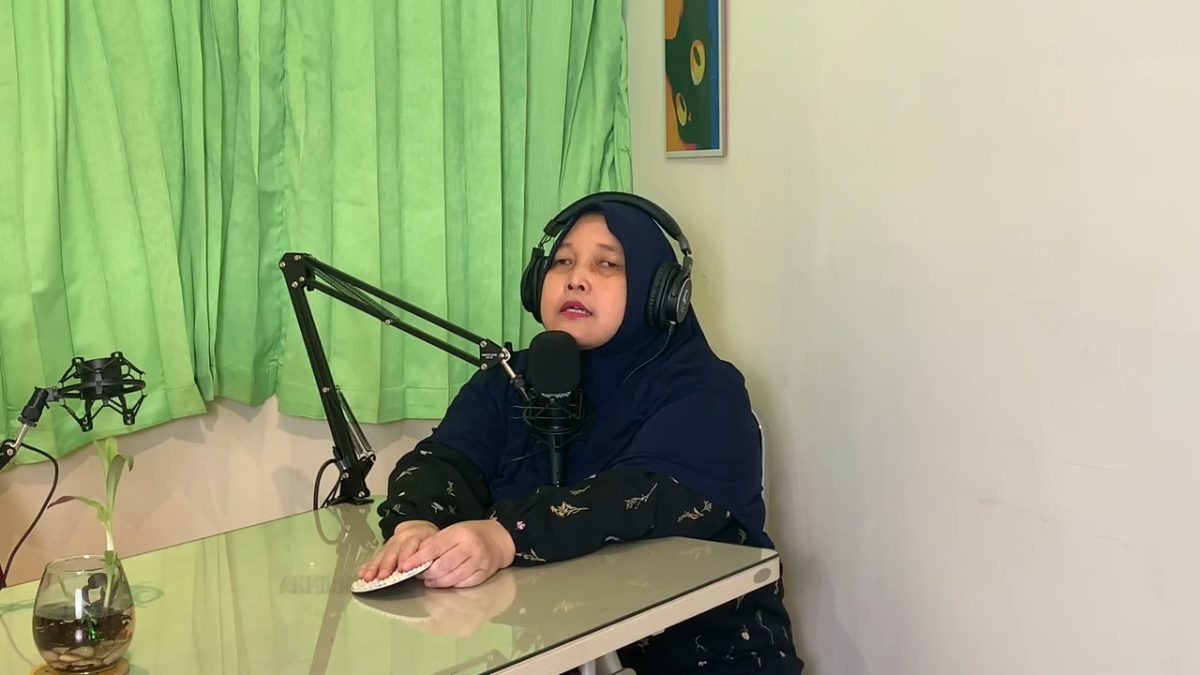
Kartunet - The government has established a strong legal foundation through Government Regulation Number 42 of 2020 concerning Accessibility to Settlements, Public Services, and Protection from Disasters for Persons with Disabilities. Through this regulation, the concept of "Inclusive Settlements" is introduced, which refers to residential areas that not only provide physical accessibility but also offer opportunities for persons with disabilities to live integrated with the general community without segregation.
However, to what extent has this policy promise been realized on the ground? An honest review from Cinttia, a visually impaired single parent who now resides in Jagakarsa Public Housing, South Jakarta, provides us with a real picture of how inclusive government-owned public housing currently is.
Well-Implemented Facilities: Zoning and Mobility Ease
From a macro architectural design perspective, the management of Jagakarsa Public Housing demonstrates excellent intent by implementing a floor zoning system. Units for persons with disabilities and the elderly (lansia) are specifically located in Towers A and C, from the first to the fifth floor. More specifically, on the first floor, three special units are provided for persons with physical disabilities who use mobility aids, as these units are designed with wider doors.
To support the independent mobility of visually impaired residents, this public housing complex has been equipped with tactile paving (guiding blocks). Ramps are also strategically located, leading directly to exits and connecting to the security post. Access to public transportation—as also mandated by Government Regulation No. 42 of 2020—is very easily accessible. There is a JakLingko feeder transport service right in front of the complex, which is only about three stops away from the TransJakarta Ragunan bus stop.
Evaluation Notes: The Importance of Universal Design in Elevators
Although the basic infrastructure is adequate, the Book on Monitoring the Fulfillment of Disability Rights reminds us that the construction of public facilities often does not fully implement "universal design" standards, where the fulfillment of accessibility criteria is sometimes inconsistent or partial.
This is evident in the elevator facilities at Jagakarsa Public Housing. The available elevators are not equipped with audio information or sound indicators. While this may not be an issue for persons with physical disabilities, for visually impaired individuals, the absence of sound features makes it difficult for them to know which floor the elevator is stopping at or operating on. Fortunately, Cinttia occupies a unit on the second floor, allowing her to exit immediately once the elevator opens for the first time from the ground floor. However, this lack of audio remains a crucial evaluation point for the management (UPRS).
Social Accessibility: Breaking Down Barriers Through Empathy
Inclusion is not just about cement and concrete; it's also about human interaction. Sociologically, disability is often defined as the result of the relationship between an individual's physical condition and their social environment. If the environment is supportive, the barriers experienced by persons with disabilities will be significantly reduced.
Fortunately, social accessibility at Jagakarsa Public Housing is very warm. There is a standard rule from the housing management that all buying and selling transactions with external parties must be conducted in the lobby area. However, food vendors within the housing complex provide cultural accommodation for residents with disabilities. After being contacted via WhatsApp message, they are willing to deliver food directly to the apartment units without requiring residents with disabilities to come down to the lobby. From a security perspective, the presence of 24-hour security and maintenance personnel provides a high sense of safety for vulnerable residents in case of any issues, such as running out of electricity tokens in the middle of the night.
Conclusion
Overall, Jagakarsa Public Housing has implemented the spirit of Inclusive Settlements quite well through the provision of basic physical facilities and supportive social environment management. Moving forward, sensory-friendly detailed improvements—such as adding sound indicators to elevators—will perfect the independence of persons with disabilities in enjoying their right to decent and equitable housing.
References:
- "Honest Review of Jagakarsa Public Housing from a Person with Disability: Is It Accessible? How Much Does It Cost? | Pertuni Media" (YouTube).
- Government Regulation of the Republic of Indonesia Number 42 of 2020 concerning Accessibility to Settlements, Public Services, and Protection from Disasters for Persons with Disabilities.
- Bappenas, et al. (2021). Book on Monitoring the Fulfillment of Disability Rights.