
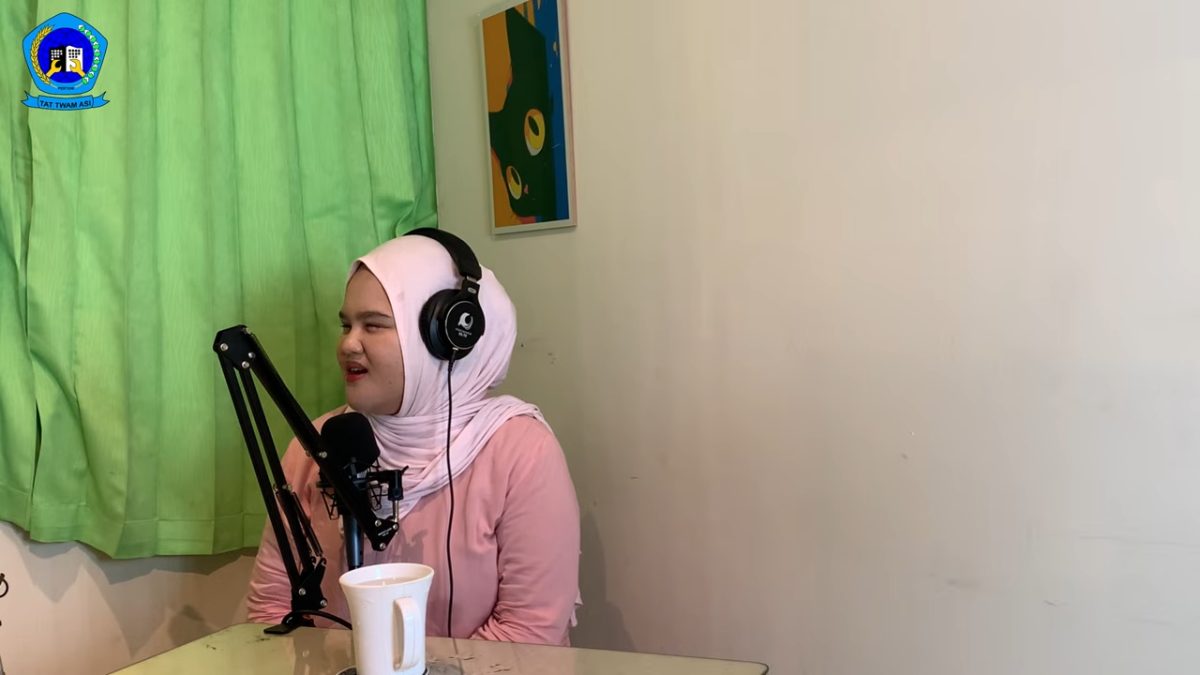
Kartunet - Becoming an expert staff member in a government institution is often associated with senior figures, decades of experience, or academic degrees equivalent to a professor. However, this stereotype has been broken by Nabila Mywita (familiarly called Lala), a 22-year-old visually impaired woman who now serves as an Expert Staff to the Mayor of Makassar. Her story is living proof that, if given the opportunity, people with disabilities can contribute at the policymaking level.
A University Strategy and a Joke That Became Reality
Lala's journey was not easy from the start. Initially, her parents did not allow her to pursue higher education. Knowing that her parents came from a political background, Lala racked her brain and eventually chose Political Science at Hasanuddin University (Unhas), hoping her parents would soften their stance seeing her follow in her father's footsteps. What started as a whimsical reason, Lala eventually found comfort and diligently delved into the field of politics.
Her career as an expert staff member also began by chance. At that time, Lala participated in an audience between a disability organization and the Mayor of Makassar. In the car, she jokingly expressed her intention, "It's okay if I join, maybe I'll get a job opening." Unexpectedly, the Mayor of Makassar specifically asked for Lala's contact information through his personal assistant. About two days after Lala completed her thesis defense, she was contacted and asked to help the Mayor realize the vision and mission of "Makassar Inclusive City."
Almost Resigned in the First Month
Entering the world of work in a government office turned out to be a mental burden. In her first month in office, Lala reflected and intended to resign. This fear arose because she felt she was the youngest expert staff among other experts who already had high academic degrees and extensive experience. Moreover, she also heard doubts from some fellow disabled friends outside who questioned why a fresh graduate was chosen.
Lala's turning point came when an acquaintance gave her profound advice. She was reminded that no professor anywhere is more knowledgeable about disability than a person with a disability themselves. Her life experiences and interactions with other disabled friends had made her a true "expert" in the field. This advice strengthened Lala to persevere and give her best contribution.
Breaking the Stigma of High Costs for Disabled Employees
Many companies or institutions are reluctant to recruit people with disabilities because they believe it will incur extra costs (cost) for providing special infrastructure or software. Lala broke this stigma. To support her work of reading hundreds of pages of documents overnight, she purely uses her personal smartphone (smartphone) equipped with a screen reader application (screen reader).
She realized the limitations of the office facilities and chose to invest in capable gadgets to ensure she could work independently. "It's wrong to think that employing people with disabilities demands extra costs from us. Friends with disabilities are very adaptive; we can adjust to circumstances," Lala said.
Real Work Guarding Disability Rights
As an expert staff member, Lala's main task is to ensure that government planning, budgeting, and evaluation stages align with Makassar's vision and mission of urban inclusion. She does not hesitate to recommend the cancellation of programs she deems irrelevant for people with disabilities, or to reject grant funding if she sees potential for misappropriation, in order to maintain integrity.
Lala also appreciates the highly professional attitude of the Mayor of Makassar. She has never been treated as a "political puppet" or merely a display to show that the city government is inclusive because it employs a visually impaired person. She is truly judged by her capacity and work results.
Conclusion and Message for the World of Work
Nabila Mywita's story demonstrates the immense potential of people with disabilities when they are given space. At the end of her story, Lala advises companies and government agencies to stop making assumptions about the inabilities of people with disabilities. "First, let people with disabilities work; don't assume beforehand. Because after they work, we will realize that people with disabilities can contribute very well if given equal opportunities," she concluded. (DPM)
References:
- "Almost Resigned in the First Month, Nabila Proves Herself Worthy of Becoming Expert Staff to the Mayor! | Pertuni Media" (YouTube).