
The advancements in artificial intelligence (AI) technology, currently viral and a hot topic worldwide, are no longer just tools for entertainment or routine office tasks. For the visually impaired community, this new wave of modern AI technology has become a game-changer, opening doors to greater independence than ever before.
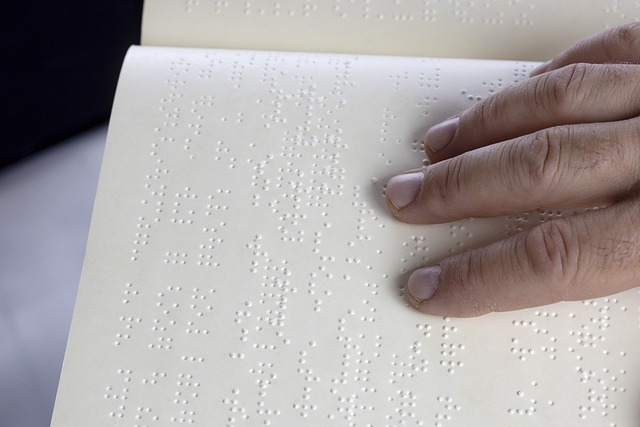
Where previously visually impaired individuals heavily relied on assistance from others or Braille texts with limited availability, now the combination of screen readers and multimodal AI can translate the visual world into highly detailed and natural-sounding audio.
***
One of the most popular innovations today is the emergence of AI models capable of instantly seeing and describing images. This feature allows visually impaired users to upload photos, documents, or scenes around them, and the system will then explain in detail what is present in the photo.
AI doesn't just simply name objects; it can contextually explain colors, facial expressions, and even the background of a location. AI-powered character recognition technology is also becoming increasingly adept at reading handwriting on food labels, prescription medications, and even personal letters that were previously difficult to access independently. This visual object recognition also helps in identifying banknote denominations or distinguishing everyday product packaging at home.
***
Today's digital assistants have evolved far beyond simple voice commands like playing music or setting alarms. With the advent of large language models, voice assistants can now engage in interactive discussions and understand complex conversational contexts.
For the visually impaired, this voice-based interaction significantly reduces software navigation time. Without needing to type or swipe the screen repeatedly, users can simply speak to request assistance in summarizing long articles, drafting written content, or even translating foreign languages directly.
***
Accessibility in physical navigation has also made significant leaps. Latest mapping applications are beginning to integrate device camera sensors with AI to provide step-by-step guidance when walking in public spaces.
Phone cameras can provide audio warnings if there are obstacles ahead, such as stairs, poles, or potholes. AI-based navigation also helps locate specific points within large buildings like exits, restrooms, or minimarket cashiers. Furthermore, modern app developers are increasingly leveraging AI to detect accessibility barriers on websites, allowing unlabeled buttons to be automatically corrected to be screen-reader friendly.
***
While AI trends offer a glimmer of new hope, real challenges still lie ahead. A primary issue often encountered is the affordability of technology, such as the need for high-specification devices and stable internet connections.
Additionally, the potential for misinformation from these systems requires users to remain vigilant, especially when reading crucial information like medication dosages. Therefore, education on the wise use of AI is vital for the visually impaired community. Understanding the strengths and limitations of this technology will help users maximize its benefits without neglecting basic safety aspects.
***
For visually impaired individuals who wish to start utilizing this technological trend, the first step can be to explore the built-in accessibility features on their respective smartphones, as well as trying easily accessible voice-based image reader applications.
Modern technology is not here to replace the role of the senses, but rather to serve as a bridge connecting the boundless potential of every individual. By continuously learning and adapting to the advancements of the times, visual impairment is no longer a primary barrier to independently exploring the world, pursuing careers, and creating inclusively in the digital age.
EASTER EGG FOUND!
Type the code ADAPTIF-KARYA-1828
Hurry! Only 18 quota left.