
Jakarta - One of the fundamental problems experienced by the visually impaired is access to books. Limited vision makes it challenging to absorb information from books, which are typically in visual or printed text format. The classic solution for this is to convert books into braille or embossed text, accessible to the visually impaired. However, with the advancement of time, audiobooks emerged, and now electronic books or e-books have developed.
How do e-books address the challenge of book access for the visually impaired? Braille is a fundamental literacy need for a visually impaired person, just like regular print or handwriting for a sighted person. Its position remains irreplaceable, even as times have advanced and the need for manual writing has been replaced by keyboard buttons. When a child experiences visual impairment from birth or later in adulthood, they need to learn to read and write braille.
This is because a visually impaired person's literacy is measured by their ability to read and write braille. However, books produced using braille are not without their challenges. The main issues concern cost and practicality. To produce braille books, special software is required for conversion from regular Latin script to braille, which is then printed with a dedicated braille printer.
This printer differs from conventional electronic printing devices that use ink. The print head of a braille printer consists of needles that form raised dots on paper, which then compose the braille characters. Due to its specialized nature, braille printers are significantly more expensive than regular printers. A single unit can cost tens to hundreds of millions [rupiah].
Consequently, many braille printers used by institutions producing braille books in Indonesia are donations from foreign countries. Furthermore, braille book production also requires special paper. While regular HVS paper can be used for sighted books, braille books require good quality paper with sufficient thickness. This ensures that the raised dots on the paper are durable and do not flatten immediately after being touched for reading.
Therefore, the paper used is also quite expensive. From a practicality standpoint, braille books are somewhat difficult to carry around and store in limited spaces. This is because braille books are typically larger than sighted books. The ratio is 1:3. This means that one page in a sighted book, on average, becomes three pages of braille book paper when transcribed into braille format.
For example, a 5CM thick high school textbook, when converted to braille, can become three braille volumes, each 10 to 15 CM thick. This fact undeniably makes braille books not flexible enough for mobile use and requires extra storage space. As a solution, reading materials for the visually impaired can now be in audio format, commonly known as audiobooks, or in electronic books (e-books).
For audiobooks, it requires the service of someone to read the text from a sighted book, which is then recorded as a voice or sound. This voice is then stored on cassettes or CDs. This format is more practical because a visually impaired person only needs a CD/MP3 player or a laptop/computer to listen to the audiobook format. Its distribution and storage are also more practical as it doesn't require as much space as braille books.
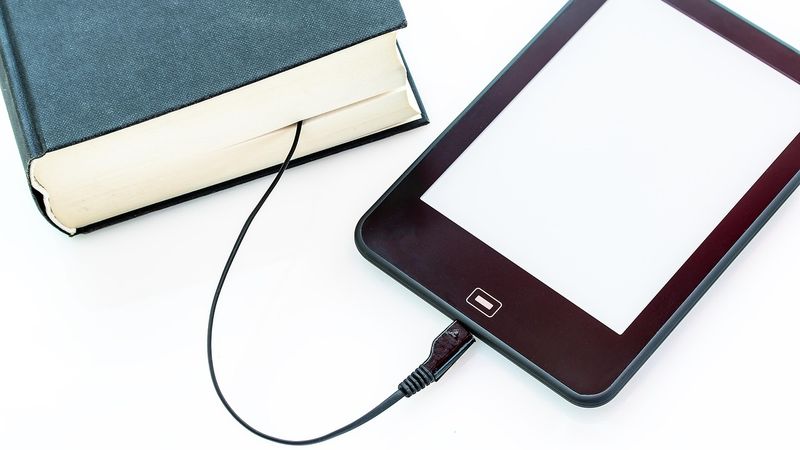
Electronic books are the most efficient solution for reading materials for the visually impaired in today's digital age. Their inclusive nature allows e-books to be enjoyed not only by the visually impaired but also by general readers who wish to switch from conventional printed books to an e-book format readable via mobile gadgets. Beyond practicality, e-books are also cheaper in terms of production costs and environmentally friendly as they don't consume paper raw materials.
Observing this opportunity, it is only fitting for authors and publishers to consider producing e-book versions of every published book. The availability of electronic versions of all reading materials will bridge the access gap to books that the visually impaired have long experienced. Perhaps the current method is to scan each book one wishes to read and then read it using a computer.
However, the scanning process is not easy; it requires time, and errors in self-scanned results by the visually impaired are unavoidable. It would be much easier if every book already had an e-book version, allowing the visually impaired to read them directly using a computer or mobile gadget. This is similar to the right of the general public who, after purchasing a book, can read it immediately without any additional processes.
The solution exists; it's now a matter of how government policies and the commitment of stakeholders in the reading world support this. Plagiarism is indeed a major issue that needs to be addressed, but it should not become an obstacle for the visually impaired to access reading materials on par with the general public. Reading and accessing information is everyone's right, without exception, including the visually impaired.
Happy World Book Day. May this serve as a shared reflection for us to continuously improve ourselves through reading. From reading, we can write, and by writing, history is made.(DPM)