

Tangerang - People in 101 regions across Indonesia are counting down the days until the biggest democratic event of the year: the simultaneous Regional Elections (Pilkada) 2017. Various issues have emerged, and dozens of methods are being employed to win the hearts of the people to elect candidates as the next regional leaders.
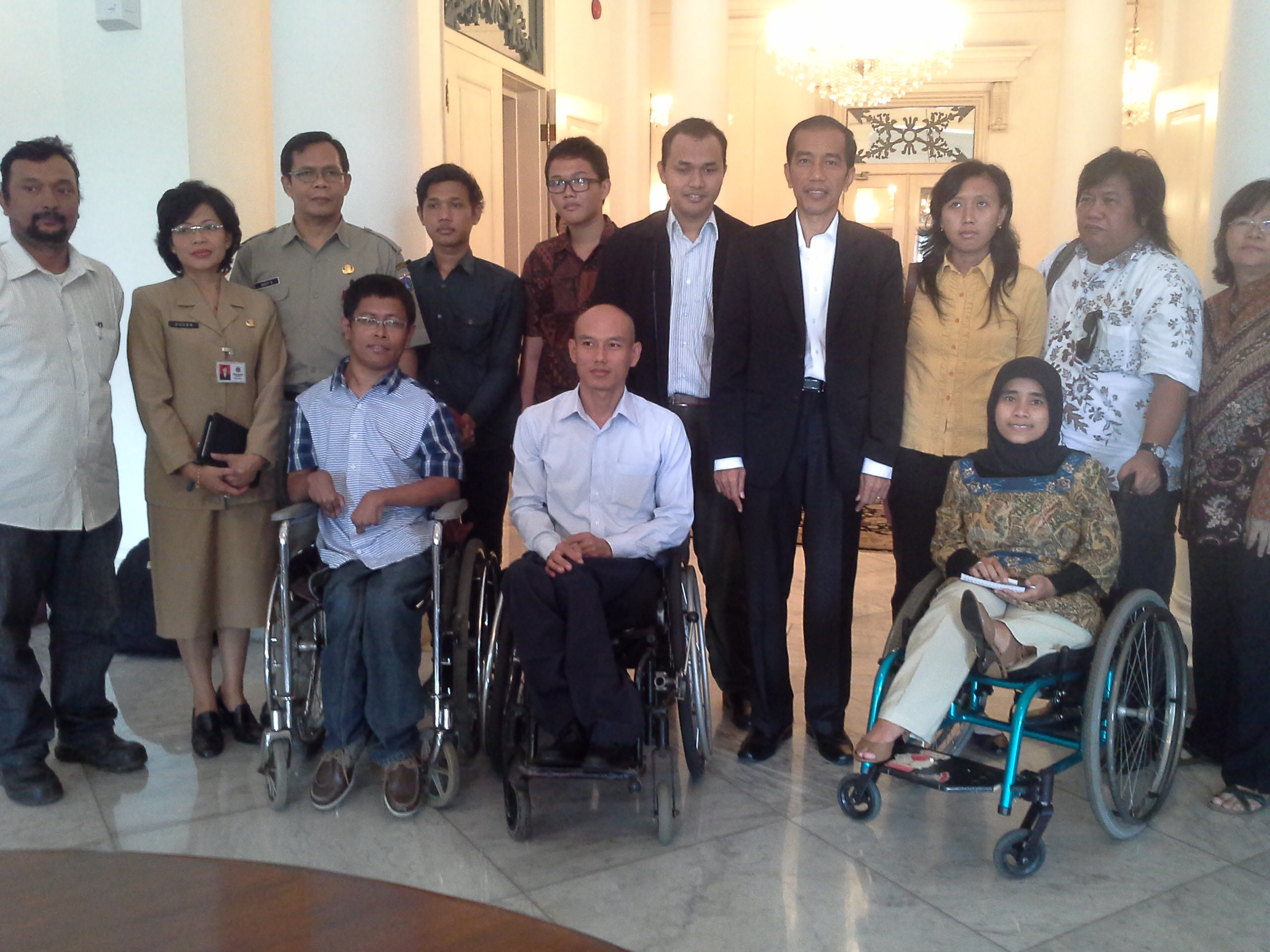
However, where is the issue of persons with disabilities in this Pilkada? Are persons with disabilities considered citizens whose rights and obligations deserve attention from regional leaders? The number of persons with disabilities, as citizens who also have the right to vote and be elected, cannot be considered small. According to a WHO survey, an estimated 10 percent of the total population in a developing country like Indonesia are persons with disabilities.
It is only fitting that this group in society, who experience disabilities due to environmental barriers, receives serious attention from policymakers. So far, voters with disabilities have generally only been used as objects to garner votes by candidates competing in elections. They are only visited when candidates need support. Such attention also tends to be social or charitable in nature.
For example, persons with disabilities are mobilized to attend an event, given donations, asked to show support after a political speech, and then sent home with meager travel expenses. After the election period, they are forgotten again and left to struggle for survival on their own. The momentum of the Pilkada, or regional head elections, should be a turning point to elevate the living standards and welfare of persons with disabilities.
As regional leaders, they naturally have a better understanding of the local situation and their citizens, including those with disabilities. The issues faced by persons with disabilities are highly complex, cross-sectoral, and vary according to the demographics and situation of each region. Whoever is elected as regional head, whether incumbent or new, must improve physical and human resource development for persons with disabilities.
This is no longer just a hope from the community of persons with disabilities, but has been mandated by Law No. 8 of 20016 concerning persons with disabilities. Development must be based on rights, not on benevolence or charity. First, education is a need that all regional heads must address. Especially with the current regional autonomy system, regional heads have the authority to realize inclusive education without exception.
It must be ensured that every person with disabilities can be accepted in general schools closest to their homes, and not be forced to study in special schools that may be far away. In addition, reasonable accommodation in the form of scholarships is also needed to meet the extra needs of students with disabilities. For example, visually impaired individuals require extra learning materials that are not cheap, such as braille books, book readers, or screen reader software for computers.
All these things need to be fulfilled so that their rights are equal to those of other citizens. Second, is the development of disability-friendly infrastructure and public facilities. It is only fitting that public facilities, which by their name are intended for the general public without exception, implement the concept of universal design. This means that various facilities built should be optimally usable by all members of society, including persons with disabilities.
The availability of accessible transportation modes, comfortable pedestrian paths, or accessible public buildings is absolutely essential. The key is that every development undertaken must comply with existing universal design standards. Aspects of buildings that accommodate persons with disabilities must not be disregarded on the grounds of lack of funds or awaiting CSR support.
Such policies are actually highly discriminatory because the fulfillment of accessibility elements in public facilities is part of the rights of persons with disabilities as citizens, as they also pay taxes and other obligations, and not merely a form of government compassion. Furthermore, also very important is employment. The output of education is employment.
The increasingly better education received by persons with disabilities today is still not matched by the availability of decent job opportunities. Inclusive education has produced young people with disabilities who have diverse educational backgrounds according to their interests. However, the available job market is still inadequate, and still views them based on their shortcomings, rather than their abilities or educational backgrounds.
Future regional heads must work hard to ensure the availability of employment for them. Because decent work can make them more prosperous, and at the same time contribute to development, rather than just being a burden on the state budget. There are many other things related to persons with disabilities that need the attention of regional heads, but one last thing we want to emphasize is the empowerment of young people with disabilities.
Like young people in general, they are the future of the nation. Young people with disabilities today are those who are more open-minded, broad-minded, more confident in social interactions, familiar with the internet and information technology, communicate with gadgets, and have higher mobility. The policies that need to be created will be different.
They need to be actively involved in policy-making and political processes. They must also be given the opportunity to contribute to bureaucracy. Because this will make public services more inclusive. The handling of young persons with disabilities must also focus on capacity and skill development. So that they can become independent entrepreneurs in this era of digital information technology, and work in formal sectors.
Of course, we all hope that whoever is elected as regional head in the 2017 Pilkada, will not only have concern for citizens with disabilities, but also have a vision to empower them to become more independent and active in development. We eagerly await the work of regional heads who genuinely want to enhance the dignity of persons with disabilities, not those who merely use them as campaign objects.